“He's one of the most interesting people I know”
An interview with Vlad Gheorghilaș by Bertalan-Andrész Timar

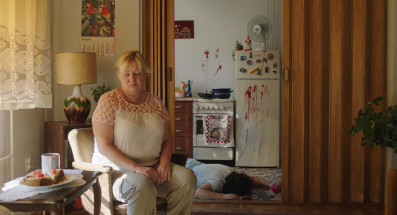
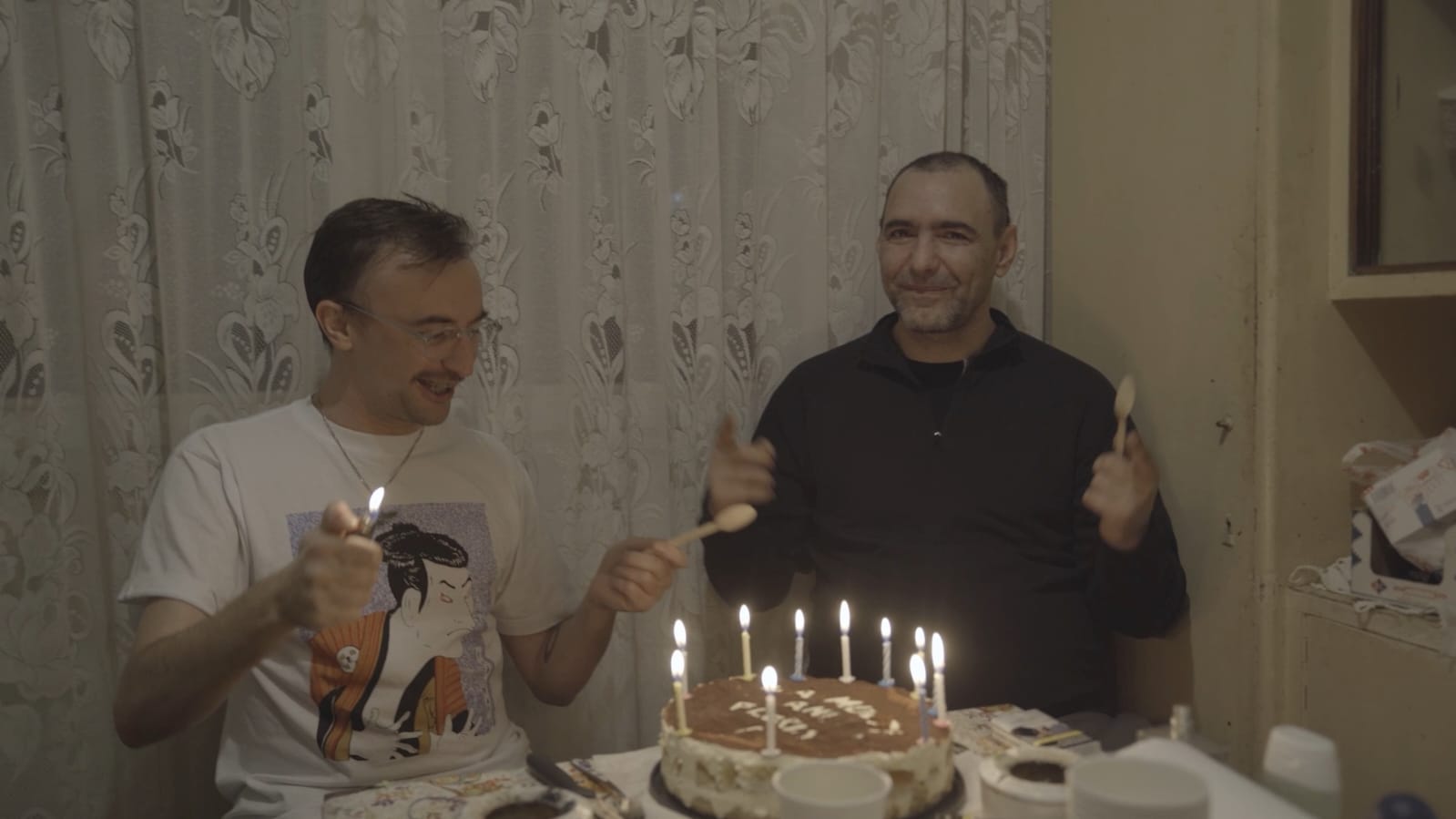
We had the opportunity to talk with Vlad Gheorghilaș, an emerging director who made Chelu, a biographical documentary that was featured in festivals like NSS Film Festival, got an Honourable Mention (Documentary category) at SeaWave Film Festival Constanța, and won the award given for the Best Documentary Short at the Athens Film Festival Georgia. The picture tells the story of Florin, a 45-year-old man who suffers from schizophrenia, he welcomes us into his life and by sharing his thoughts and feelings he attempts to demystify the preconceptions about his illness.
Bertalan-Andrész Timar: I know you are a third-year film directing student and I was curious about what made you choose this career path. What fascinates you with movies?
Vlad Gheorghilaș: Well, I've loved reading since I was very young, and I read mostly fantasy. In my high school years I watched mainstream cinema, they were kind of mediocre, but after I came to Bucharest (to my first university, because now I'm at my second one), I started watching better films. The first time I applied to UNATC (National University of Theatre and Film "I.L. Caragiale"), I didn’t get in. Back then, my movie references were the films of Scorsese and Tarantino; that was pretty much the “peak” of cinema for me. After that I started watching films with more diverse stories, reading different books, more classical literature and that's how I developed a love for stories. Initially I wanted to become a film actor, but eventually, I don't know, I got scared, or, by watching movies I found that directing was much more interesting, you get to build characters and create a whole universe from scratch. At first, I was very passionate about the psychology of characters. Now I want to continue telling stories, maybe not just through films, but right now this is what interests me the most.
B.-A.T.: What other mediums would you like to use to tell your stories?
V.G.: If there were another medium, it would be literature, but exclusively prose, because I'm not good at poetry at all; I'm the worst person to talk to when it comes to poetry. Ninety-five percent of the books I read are prose fiction, so that would be my area. Maybe music, someday, if I get to know some people from the industry, I'd like to do theater shows too, but that's harder. Right now, I know very little about theater, but hey... I'm learning at college, and I want to be as versatile as possible, so maybe over time I'll find ways to combine them, who knows.
B.-A.T.: Where did you get the idea of making this picture?
V.G.: Well, when I entered college, we were told that we had to make a biographical documentary. I already knew Florin from around 2019, four years before the film. We met on Tribal Wars (real-time strategy game), and I ended up playing with him and his friends. By the time I got into UNATC I wasn't playing Tribal Wars anymore, one day Florin called to congratulate me and somehow, we reconnected. Then it dawned on me that he's one of the most interesting people I know, even though I didn't know him very closely, we mostly joked around with the guys on Discord. From then on, I started seeing him a lot, talking to him and learning a lot about him. I thought it would be a useful film; I figured that if I was going to make a documentary, it might as well be about something important that I could relate to. Before college, I also had periods when I felt very lonely and isolated, so I could relate to him very much.
B.-A.T.: How did your friendship influence the production of the film?
V.G.: Well, I think it made his job a lot easier, within reason, of course, but the fact that we talked for, I don't know, dozens of hours, saw each other dozens of times before filming, he invited me to his home, helped him get used to me. I recorded him a few times with my phone, I wanted to familiarize him a little with the feeling of being filmed. I took a few people from the crew to his house, one by one because I wanted him to get to know them a little, to get used to their presence before we got to the actual shooting, and in the end, he got used to "these young people". He is very welcoming, a very warm person, and he was happy when we went to his house to film. It was very difficult for him, but he was happy and there were quite a few moments when he said that we were like a family, or that we were his children. So, as difficult as it was for him because of his condition, it was just as easy because of our relationship, mine with him, but also the crew’s relationship with him, because between takes we were constantly laughing and chatting. He would tell us things when we weren't recording, and we would be like, "Why aren't we shooting this?" but that's how it works, when something interesting happens, the camera isn't rolling.
B.-A.T.: How long did the filming take? Did you manage to shoot everything in one day, or did it take several days?
V.G.: We shoot for three days straight. I wanted to film a little later, but there was a problem with the equipment at the university, everyone needed it, and at one point I got scared because I was told that I didn't really have time to film. Although I wasn't ready to make this picture, about four days before we started, I decided that I had to shoot all three days back-to-back. That's when I thought about most of the film. Those were some stressful days, and I would have liked them not to be back-to-back so that I could observe him over a longer period. In the end, we filmed from December 1st, his birthday, until the 3rd, and that was it, we didn't go back afterwords.
B.-A.T.: I was wondering if you filmed on the national holiday (December 1st). I assume you had quite a lot of b-roll, since you filmed many shots, some of which were improvised.
V.G.: Yes, his birthday was complicated. We filmed much more outside, with him and his friends, than what you see in the picture, but since we were all pretty inexperienced, there were unusable shots that didn't add anything to the movie. So, yes, we relied only on what you see there on the terrace and used some sound from other shots, the ones you see in the film, I think that's what you were referring to. We also had the Christmas market, which was packed with people, and it was very difficult for us to film anything there, it threw us off... at least I was thrown off, because I had no idea what to do there, it being my first short.
B.-A.T.: How difficult was it to select the scenes that remain in the final product? Even though it's a documentary, you somehow create a character. Florin plays himself, but he is also a representative of this community, of these people who suffer from schizophrenia or depression. How difficult was it to assemble the film, to make a coherent narrative that incorporated his story, but also had a universal facet?
V.G.: By talking a lot before filming. I knew him very well, so I planned a lot before we started filming. I asked some very specific questions to reach a place I wanted to explore. The film largely retained the structure I had thought out before shooting, so it's not a film that was put together during editing; it was planned from the beginning. This universal spin arose because the situation of these people is very similar; they are isolated and discriminated against. It seems very natural that he would speak on behalf of many people, especially since he talks about the people around him, about society. But, yes, he's also very specific on the other hand, in that he really is a unique character and person.
B.-A.T.: Do you have a project you're currently working on, or something that will be released soon?
V.G.: I have two unfinished fiction projects. I want to re-edit one and finish the sound for the other. This year I must make a fiction film so that I can graduate. I have a vague idea, but I can't give too many details because I don't know them myself. I’m certain that the two fiction films and the one I'm preparing are much less serious, and more comical than dramatic. I don't know if I'd ever want to make another dramatic film, especially like this one, my graduation film will probably be a very crazy comedy.
B.-A.T.: Why do you say you wouldn't make another drama? Was it such an intense process?
V.G.: The film was intense, yes, it drained me emotionally, but ever since I started college, I've lost interest in dramas, more classic or arthouse films. I used to be a big fan of Bergman, Tarkovsky, Antonioni, but now, at this point in my life, I don't want to see any of their films. I increasingly like films that use very little speech. Somehow, dramas fall into this trap of using a lot of words to tell a story, and I want to rely heavily on images and nonverbal language. But, well, we'll see. If I make a comedy, I'll probably need words. I don't want to make slapsticks or anything like that. I say this because Chelu is a film full of words, and the last film I made has only one 5-second line in 6 and a half minutes. To be fair, we shot it on a black and white film and had to adapt a little, the camera was noisy, and it would have been very difficult to synchronize in post-production. I'm used to making films without words, and I hope at least half of the film will remain without words, that's my goal. I’m kidding, of course.