Reflections: Home truths
A screening of the Jacob Cheung classic Cageman at the Far East Film Festival leads to thoughts about space, homes and society

By Cecilia Li
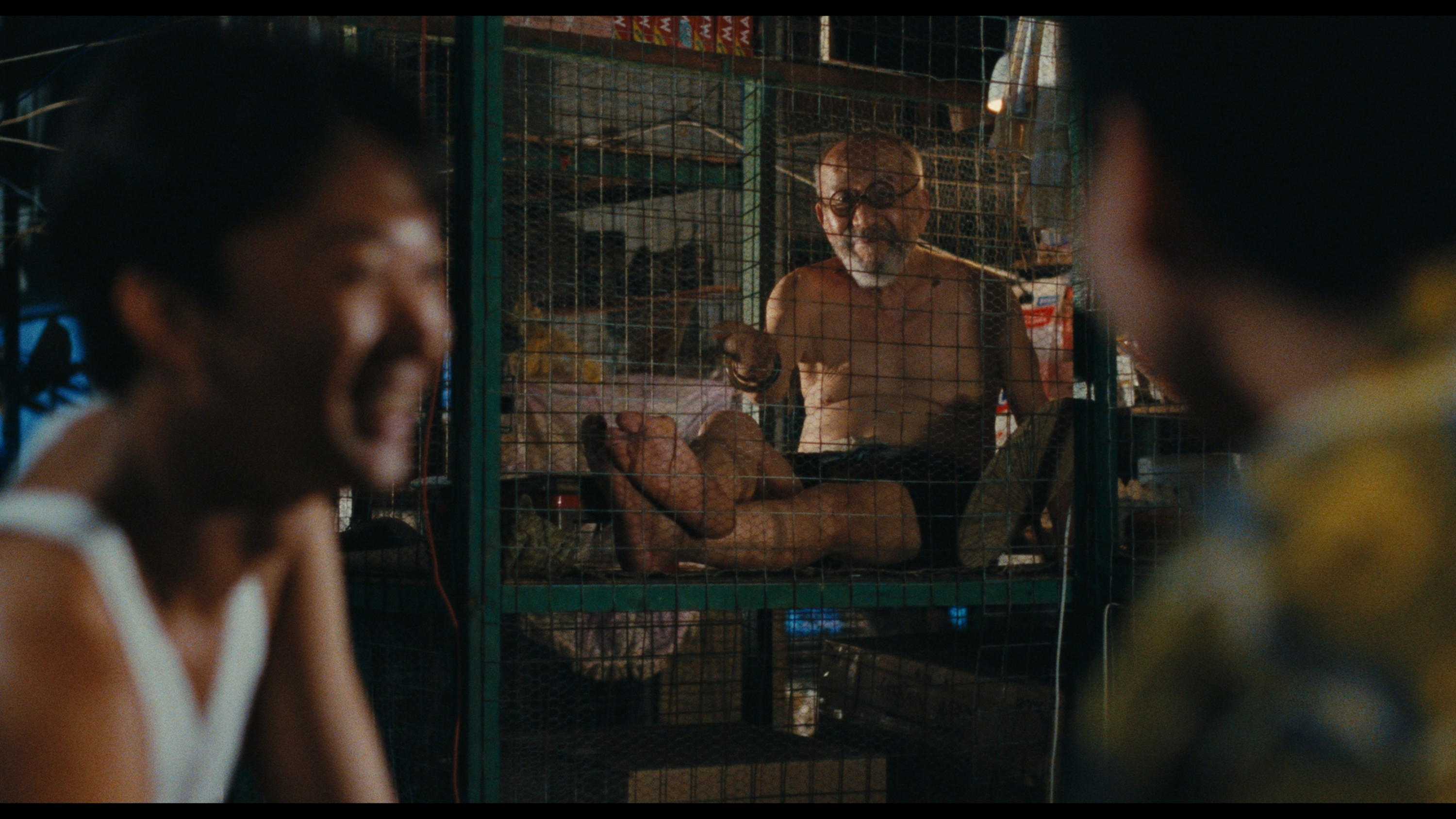
During a screening of Cageman (1992) at the 28th Far East Film Festival, locals were struck by something at first difficult to comprehend, given their own urban living experiences: Hong Kong’s cage homes.
In one of the wealthiest cities in the world, people live inside metal grids, stacked up like they’re caged inside a zoo. And director Jacob Cheung chose to portray life in and around these dwellings to shed light on the ills he saw in Hong Kong society but also to look at notions of friendship, and of community.
Hong Kong’s housing crisis did not begin with cage homes, though these structures later became one of its most visible symbols. In the post-war period, informal squatters’ settlements spread across the city’s hillsides and margins, and cage homes came later, once Hong Kong’s government shifted people into urban areas.
Cheung’s film looks at how people adjust to the spaces they find themselves in. And this got me to thinking about the conditions also portrayed in Vittorio De Sica’s classic Miracle in Milan (1951) and – as a young filmmaker myself – about how filmmakers across the globe use the spaces they see around them to help tell their stories.
In Hong Kong, where I grew up, squatters’ homes were initially built for survival, shaped more by necessity than by formal urban planning. But, over time, these precarious settlements gradually evolved into the cage homes seen on the screen back in the early 90s and still in existence today. The shift - from these open settlements to extreme spatial compression – came via a structural transformation tied to labour and housing policies, government intervention, land scarcity, and economic pressures.
Following a devastating fire that swept through the Shek Kip Mei squatter settlement on 24 December, 1953 — rendering approximately 50,000 people homeless, many of them refugees from China’s Civil War - Hong Kong’s colonial government radically reformed its housing policy. Public housing estates were constructed, and informal settlements were progressively controlled and eliminated. Poverty did not disappear, it was spatially reconfigured, shifting alongside private housing development from low-rise peripheral settlements to increasingly vertical and compressed forms within the urban core.
When Cheung made Cageman, this transformation was already part of everyday reality. Inspired by a 1990 fire in a cage home on Nam Cheong Street in the city’s bustling Sham Shui Po, the film explores the conditions generated by socio-spatial reality. The director used journalist contacts to gain access to real cage housing, and he saw life shaped not only by poverty, but by the physical limits of urban space, rising rents, and unequal access to public housing. He saw the cages – space - not only as a symbol of suffering, but as the product of the system. The film struck a raw nerve in Hong Kong – winning four Hong Kong Film Awards, including Best Film and Best Director.
In Miracle in Milan, meanwhile, poverty remains visible but is not framed so much by those notions of extreme spatial compression. While in Cageman, the combination of real estate markets, land scarcity, and unequal access to housing policy produces a radically concentrated form of urban survival, in Miracle in Milan we join a collection of impoverished characters forced by fortunes of war to find their own space (or village) on the fringes of society.
These are two very different films, but both are social critique. In different ways, both films also function as social memories, preserving traces of the historical conditions and forms of marginality they depict.
Hong Kong has always operated under very different conditions to Italy. As one of the cities with the highest property prices in the world and extremely high population density, high living cost and land scarcity is a structural condition.
Even with a developed public housing system, access is regulated by long waiting lists, eligibility criteria, and market pressures that exclude part of the population. For this reason, informal housing forms such as cage homes, subdivided flats, and so-called “coffin homes” of around 100 sq feet persist.
Although traditional cage homes have declined significantly, especially after regulations such as the Bedspace Apartments Ordinance of 1994, they have not disappeared entirely. Even today, thousands of low-income people still live in precarious and heavily compressed housing conditions, a sign not only of poverty but of unequal urban spatial distribution.
Bringing Cageman and Miracle in Milan together reveals how housing in cinema functions not merely as a backdrop to narrative, but as a means of reflecting on the ways societies organise space, negotiate change, and confront questions of survival. The contrast between the open settlements of post-war Milan and the cramped cage homes of contemporary Hong Kong emerges from differing geographies, urban densities, economic structures, and, above all, the policies that shape everyday life. In both films, housing is not simply a setting; it becomes a central narrative device through which broader social realities are made visible.
by Cecilia Li, a film student based in Udine.