Can you see? - CineParadis Review
by Nicole Tescaru

Awarded by Special Jury Mention at Festivalul Internațional de Scurtmetraje „Cinema Paradiso”, in Cluj-napoca, Romania, Cezary Orłowski’s short film Can you see? (2025) tells the story of an old married couple, whose ordinary life is disrupted when a stain resembling the Virgin Mary appears on their window. This divine intervention proves to be more of a challenge for this struggling relationship than a blessing. Will divinity change the two’s dynamic for the better, or will it worsen it?
Longevity and stability do not necessarily mean contentment within a relationship. The day of their 50th anniversary doesn’t seem to be a moment of celebration, but one of unremarkable acknowledgement of the event. While the husband is basking in their routine, the wife tries to bring the spark back in their marriage, but to no avail. However, when a smudge resembling the Virgin Mary suddenly makes itself visible on their window, it holds a double meaning: it could be there as a prize for the commitment the two have had to each other through the years, a token of their love, or it could imply the fact that their marriage needs a miracle in order to be saved. The line between what the stain seems to represent and what it actually does starts becoming less blurry when, during the interview that announces the miracle their love brought to the world, the wife is visibly uncomfortable with the way her husband is describing their marriage as a burden, rather than as a gift.
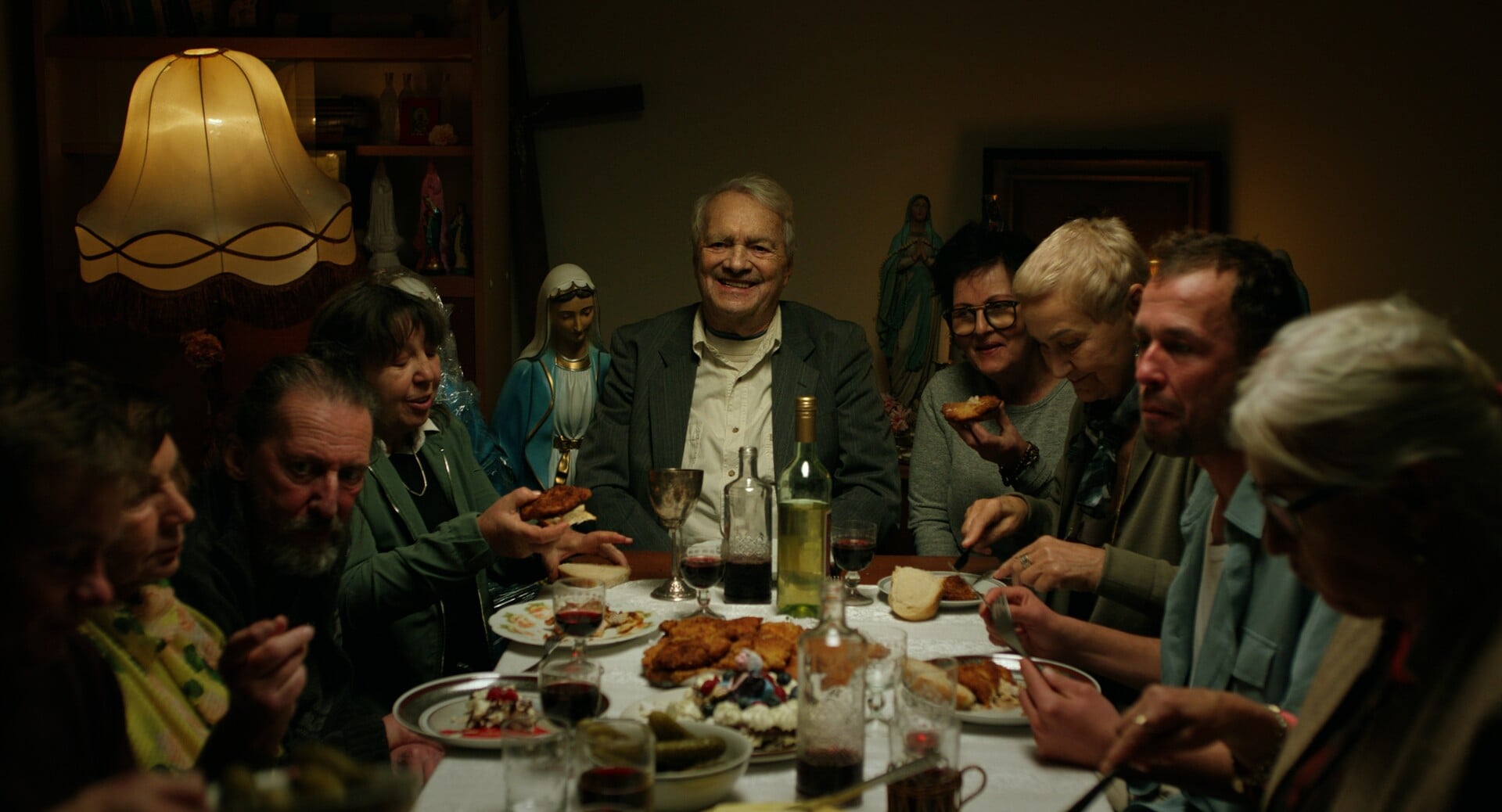
The peculiar event brings a lot of attention to their house and breaks their routine. Even though the husband was content with their repetitive life, he basks in the attention this event brought to their family. And even though the wife needed a change of pace, this does not come from the source she needed - her husband. Their usually empty house is now full of people who are there to celebrate the miracle that their marriage embodied on the window. However, this coincidence only gives the illusion of satisfaction and happiness. It is not an instrument through which the spark at the beginning of their relationship is magically brought back, but rather a context which finally offers the wife the opportunity to express her frustrations.
The title Can you see? does not ask for a literal answer. Even though the Virgin Mary stain is the visible symbol that started the entire event, it is actually there to ask the couple a deeper question: “Can you see the problem? Can you see the solution? Can you see each other?” One of the wife’s friends tells her that people see only what they wish to see. Just as people see the reflection of Virgin Mary on their window and decide it’s a blessing for their own well-being, the couple needs to make the choice to see the problem in their relationship and acknowledge it. Ignorance is no longer possible, for it does not benefit either of them. This strange event finally gives the wife the opportunity to flare up, at the dinner table. That’s the moment the husband sees beyond what is immediately visible. He realizes that this is a tipping point in their marriage, where his next step will make the difference. The choice was not in the hands of a higher power, but in his own.
All in all, the film invites the viewer to look behind what is visible, to see the essence. While it is easy to let routine take over and stop you from noticing the ever-changing person in front of you, the film asks the viewer to remain an attentive spectator. Religious symbols, absurd situations and a simple, yet powerful dialogue are the ingredients which show that keeping relationships requires active attention, acknowledgement and learning.