Cow Killer – CineParadis Review
by Stefania Ulici

In a world where silence, gestures and actions become a language of their own, director and writer Farhad Mohamadzadeh lets them do the work of both showing and telling in his debut short film Cow Killer (2024), screened at the International Short Film Festival “Cinema Paradiso”. An innocent wish to save a beloved bovine becomes a deaf young girl’s demise.
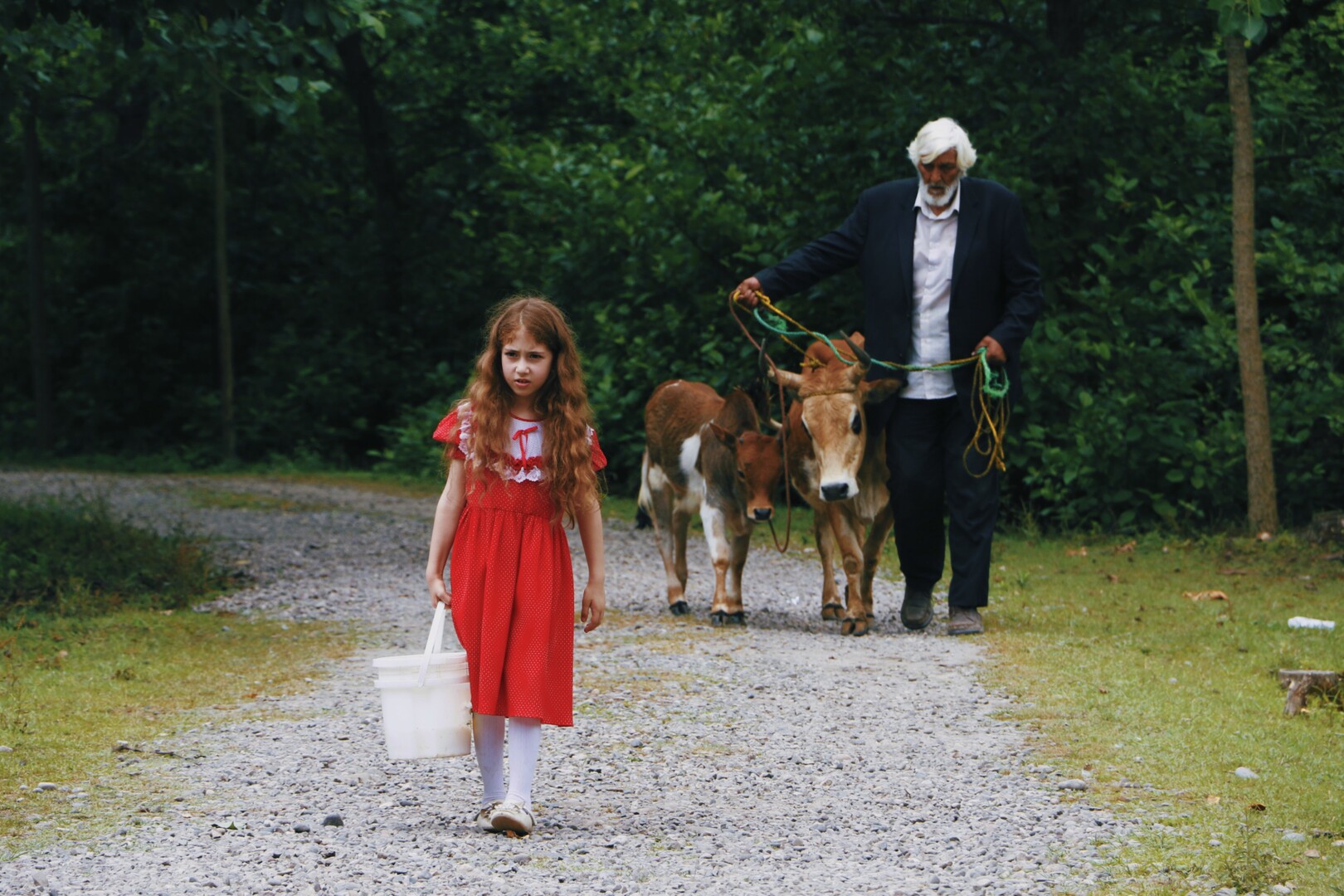
Early on, we are introduced to Naser, a guardian of life regardless of the purpose it may serve. He is not only known as a keeper of useless cows, but also as the caregiver of his deaf daughter. Her name is not revealed for most of the film, much like the livestock she shares her home with, which are seldom named. We only learn the girl’s name when she is persuaded to heal the last cow, when she becomes necessary. In this sense, the girl and the cow become metaphorical kin: they both exist in a world where their value is determined by what they can provide.
The girl cares for the cow so deeply that she falls asleep caressing one of them, sharing an intimate final moment with it before its seemingly inevitable death. Yet, by morning, her father discovers a miracle. Not only has the cow survived, but it has also begun producing milk. The girl slowly assumes the role of the wounded healer, a deaf girl capable of healing everyone but herself. Her newfound ability transforms her from someone overlooked into someone whose value is suddenly recognised. Naser and his daughter leave for the town, where she is presented almost like the goose that lays the golden eggs. At last, she is worth something.
When Naser tries to reconcile with the townspeople, an invisible line is drawn between the young girl and the locals. She sits in her father’s car, the scene shot from her perspective, above the men despite her obvious impairment. We move from chaos, from men arguing, to a sudden tranquillity, the same quiet that follows us throughout the film. We can only imagine the confusion of trying to make sense of a world when the very sense meant to help you understand it seems to betray you. The silence is once again broken by the cow’s mooing. Although helpless, the animals can still make themselves heard, while the girl cannot.
The film does not use silence whenever the daughter appears, but rather reserves it for moments of alienation. Through her silent perspective, we are placed inside her isolation. The plot progresses as her father attempts to prove her miraculous talent, milking her dry in the process and nudging her towards choosing her own philosophy of life.
Power dynamics and alienation are subtly illustrated four times through perspective and setting. We first see the girl in her room from a higher vantage point, a framing that is repeated when she sits in her father’s car, when she is alone in the car, and finally at the top of the stairs leading back to the room where the story started, completing the cycle. Each time, she is visually elevated, giving her a sense of power while simultaneously emphasising her lack of autonomy.
This contradiction reflects the film’s deeper philosophical dissonance. Naser believes that all forms of life deserve to live, while his daughter leans towards a more nihilistic view of existence. The horns peeking from behind her foreshadow her final act of defiance. At first, they appear almost devilish, perhaps reflecting her rejection of her father’s optimism and his belief in the value of life. She stands above others, yet remains powerless.